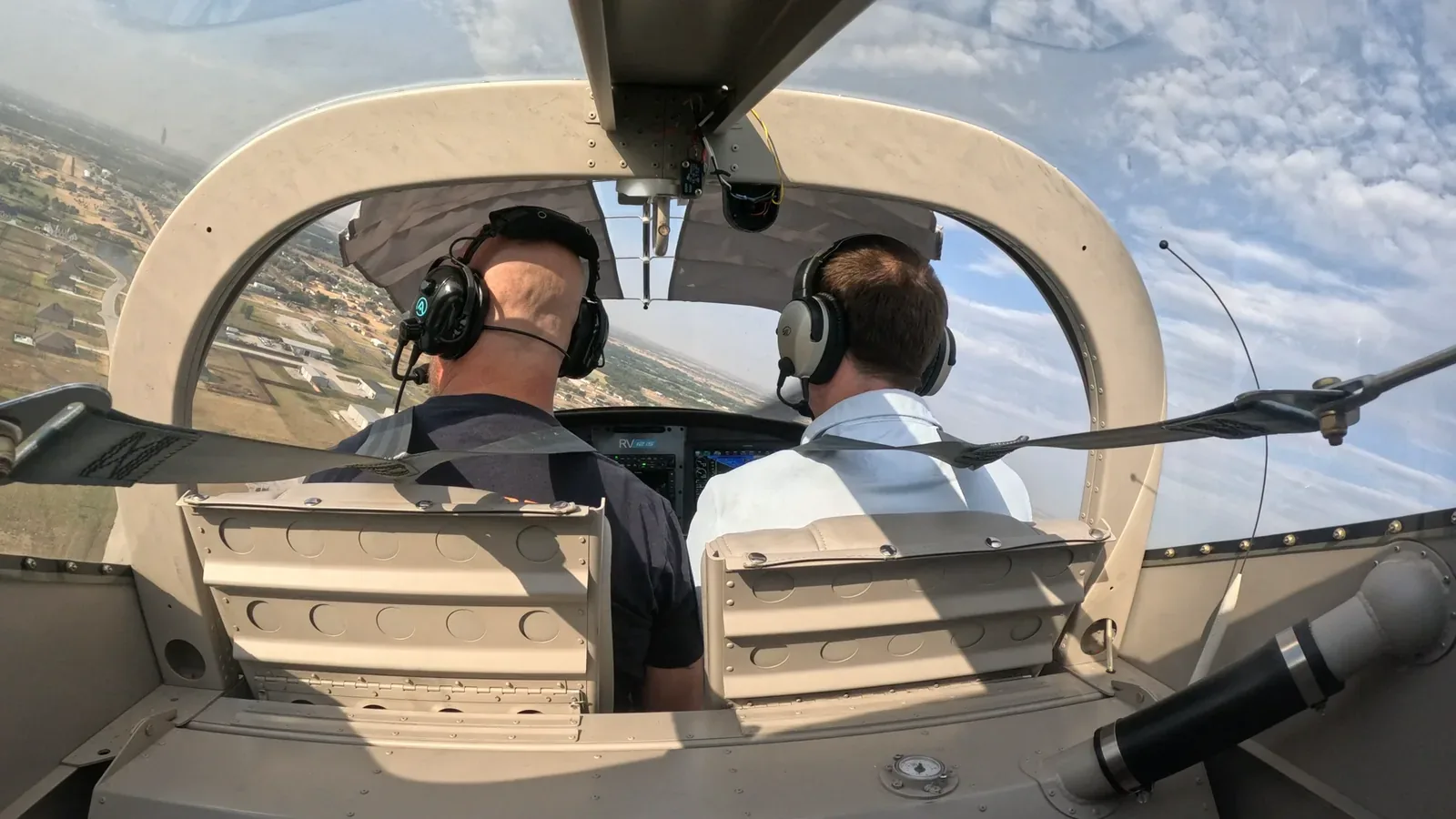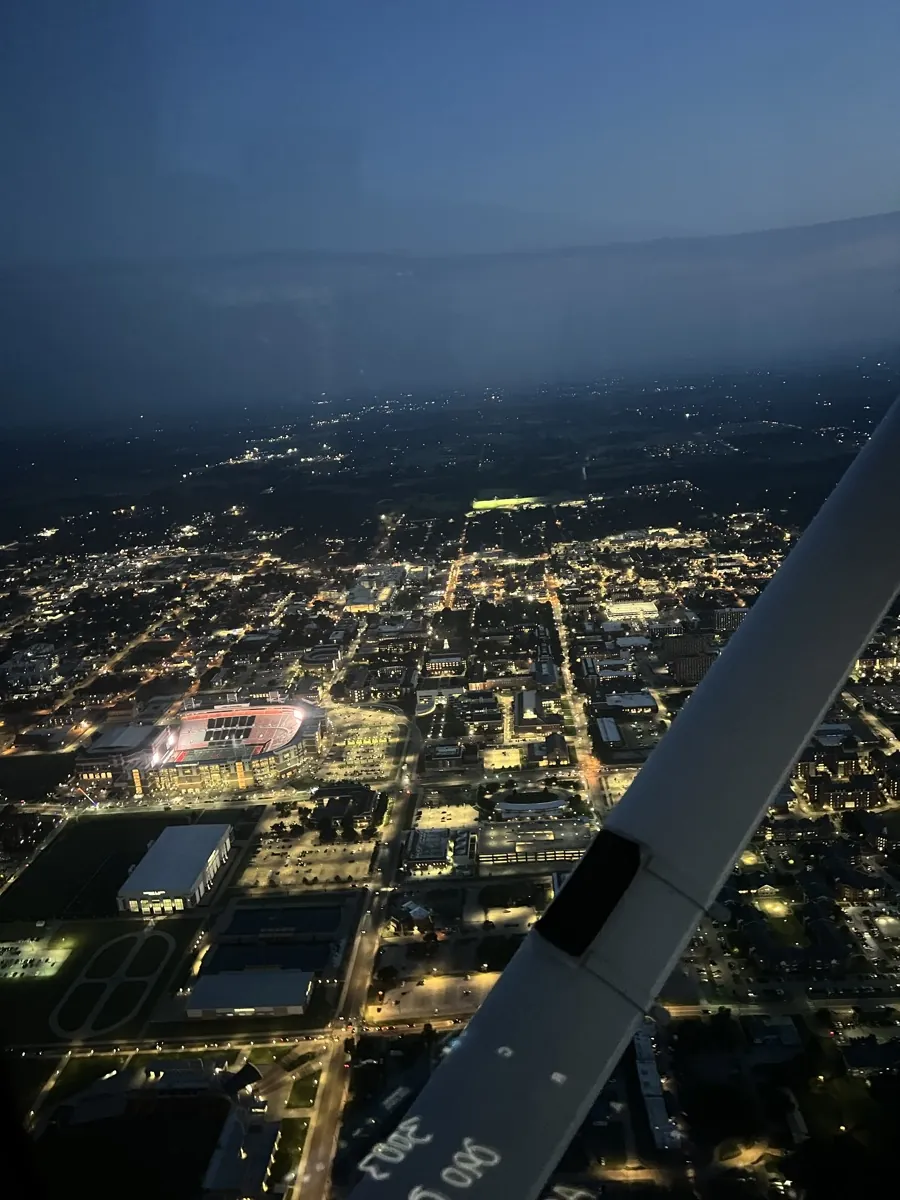


People expect a trainer to be an old airplane with round gauges and a fuel bill that shows up after the lesson. The RV-12iS is neither, which is why it is the airplane I put most new students in.
What is the RV-12iS?
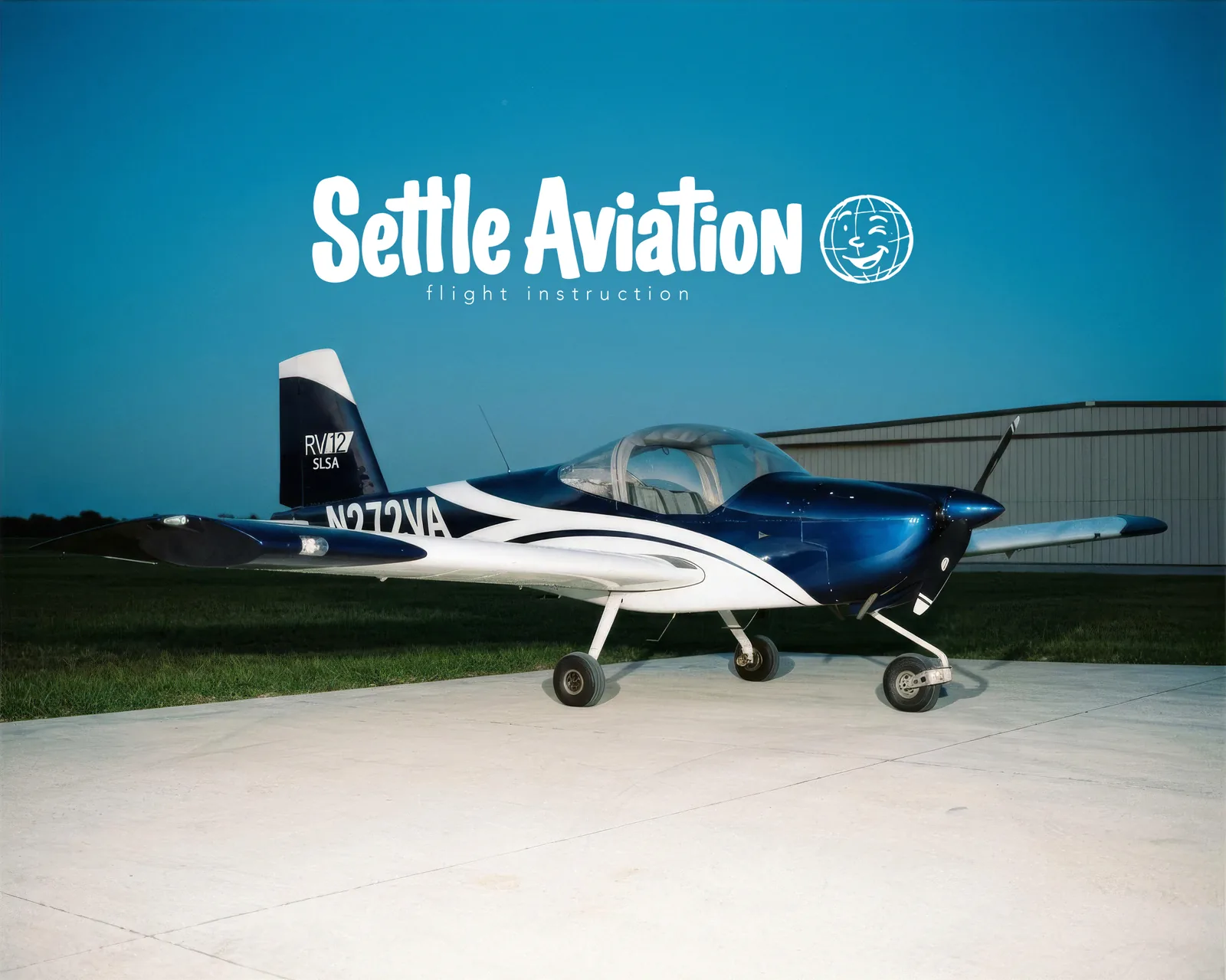
A two-seat light sport airplane built by Van’s Aircraft, with a fuel-injected Rotax 912 iS engine and a Garmin avionics package. The fleet has three 2023 RV-12iS trainers, N903S, N492VT and the orange N812EJ, plus N272VA, the original RV-12.
Why does the glass panel matter?
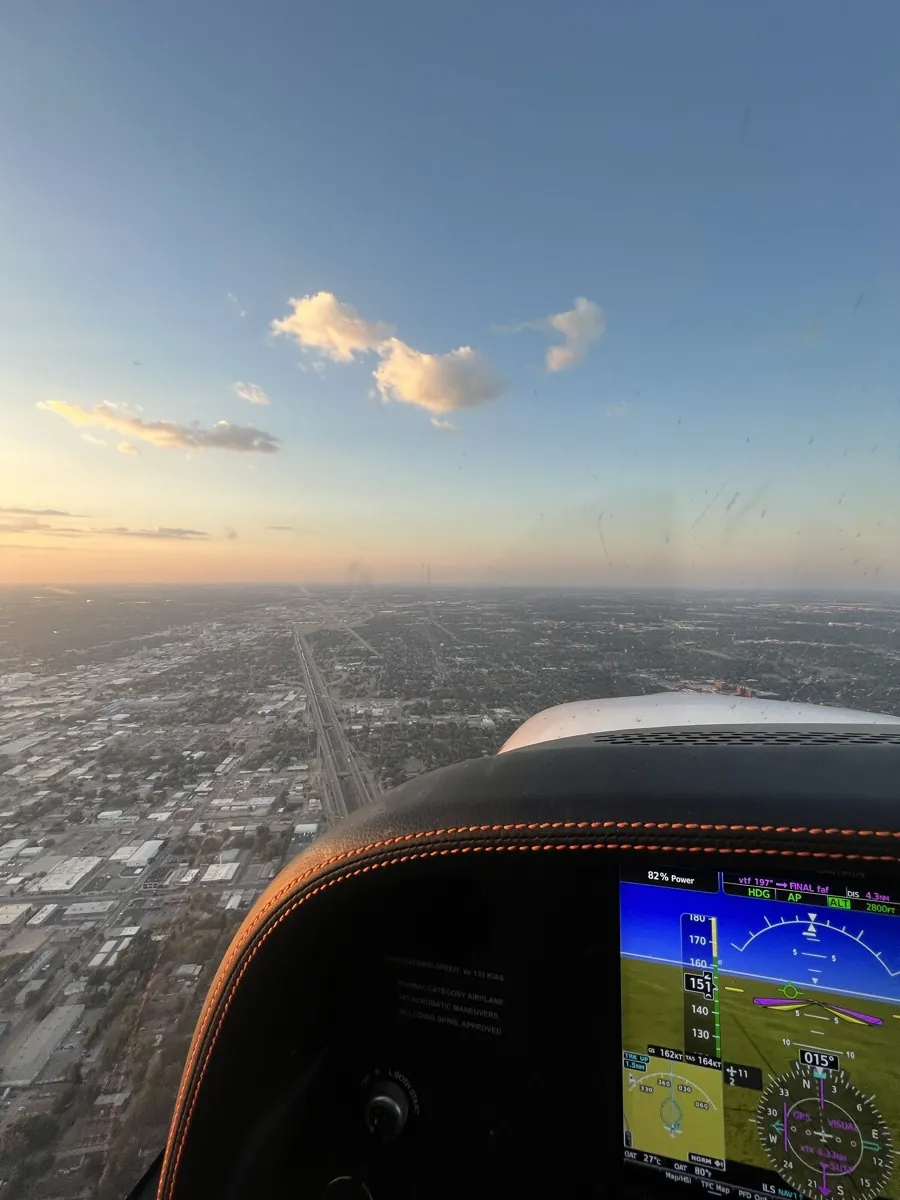
Because you learn on the kind of instruments newer airplanes use. The RV-12iS trainers carry dual Garmin G3X Touch displays: attitude, airspeed, altitude, navigation and engine data on screens instead of a row of round dials. N903S and N492VT add a Garmin GTN 650 and an autopilot and are equipped for instrument flight, so a student who later wants an instrument rating can keep training on the same panel.
A student who learns on glass from the first lesson does not have to relearn the panel later.
Why is it cheaper to fly?
Two reasons.
The engine sips fuel. Van’s handbook for the RV-12iS shows about 118 knots true at 5,500 rpm on roughly 5.3 gallons an hour at 4,500 feet, and about 105 knots on 4.3 gallons an hour at 5,000 rpm. That is a fraction of what a traditional four-seat trainer burns.
The rate is wet. Every airplane in the fleet is quoted with fuel included. The RV-12iS is $165 an hour and my instruction is $75 an hour, so an hour of dual is $240. There is no fuel receipt, no guessing what the pump price was that day.
What is the trade-off?
Two seats and a 1,320 pound maximum weight. It is not the airplane for flying a family of four. For that, and for the multi-engine rating, there is the Tecnam twin.
Does it fit the sport pilot certificate?
Yes. It is a light sport airplane, so it fits the sport pilot path, which has a 20 hour FAA minimum. Most people start with the private pilot certificate, and the airplane works for that too. The learn to fly page covers the difference, and every tail number is on the fleet page.