
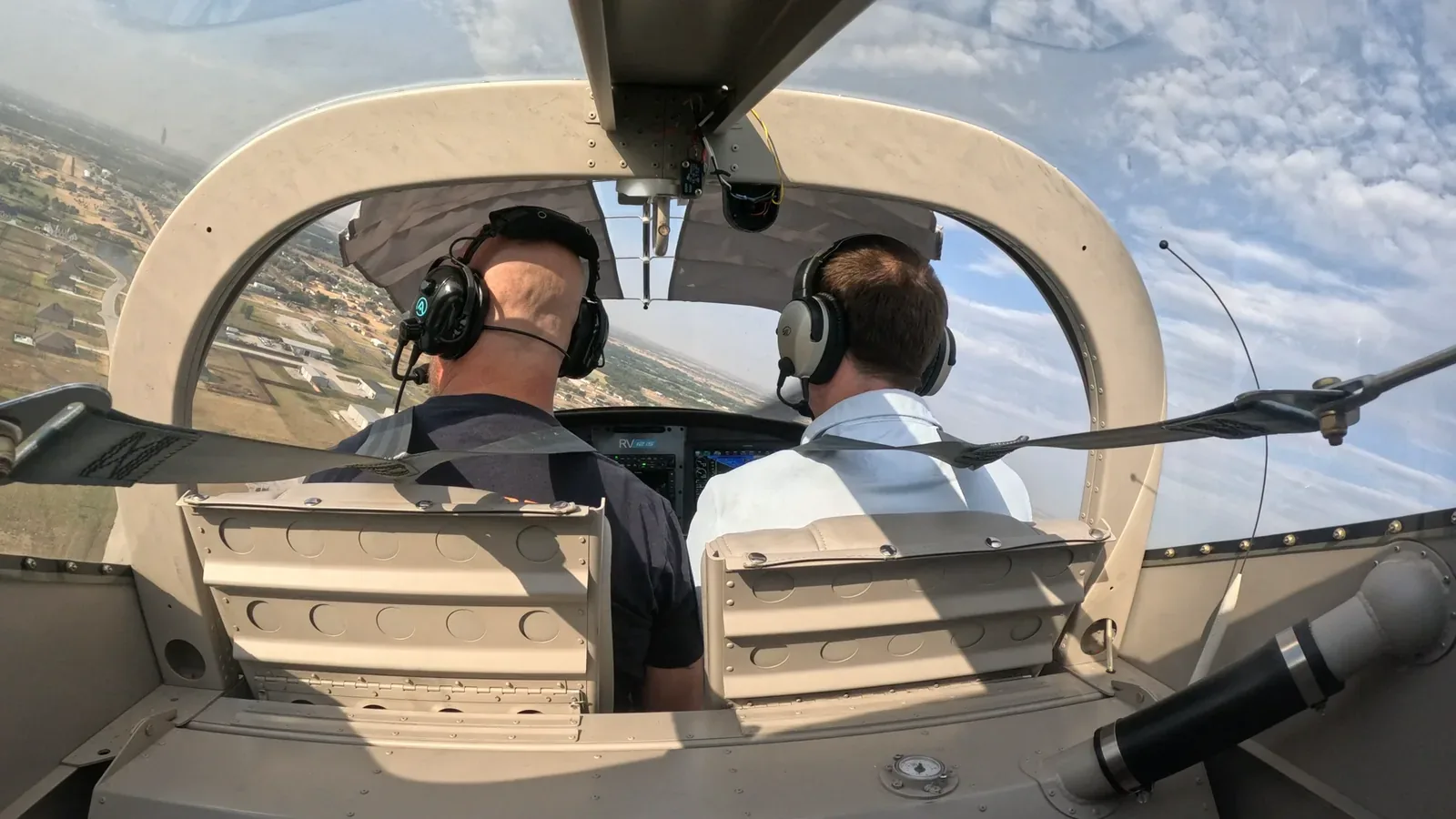
Every student pilot hits the same wall. The airplane is moving at 70 knots, the radio is talking, the checklist is on your knee, and your brain is trying to remember what comes after the flaps. The airplane feels fast. It is not the airplane. It is that you are figuring out the sequence in real time.
Chair flying fixes that, and it is free.
What is chair flying?
Sit in a kitchen chair. Put the checklist on your knee. Close your eyes if it helps. Then fly the lesson out loud, from the moment you climb in to the moment you shut down:
- Touch each switch in the flow, in order, and say what it is
- Say the radio calls word for word, including the ones you dread
- Walk the traffic pattern: where you turn, what the airspeed should be, when the flaps go in
- Rehearse the what-ifs: an engine that goes quiet, a go-around, a runway change
It feels a little silly the first time. By the third time it feels like cheating.
Why does it work so well?
Because the cockpit stops being the place where you learn the order of things. When the sequence already lives in your head, your attention is free for the part that actually needs the airplane: feel, timing, looking outside. That is why chair flying makes the airplane feel slower. Nothing about the airplane changed. You just stopped being behind it.
It also saves money. The most expensive hour in flight training is the one you repeat because the last lesson did not stick. Ten minutes in a chair is cheaper than twenty minutes in the air re-learning a flow.
How much should you do?
Ten or fifteen minutes the night before a lesson, and five minutes in the parking lot before you walk in. Focus on whatever the next lesson covers. If you are working toward your first solo, chair fly the pattern until you can do it without the checklist, then do it once more with the checklist to make sure you did not skip anything.
What should you chair fly first?
Start with the three things that eat the most lesson time:
- The before-takeoff flow. It is long, it is in a set order, and it happens with the engine running and the clock ticking.
- The traffic pattern. Every turn, every power change, every flap setting, and the radio call that goes with each one.
- The radio. Listening to live tower audio on your drive helps too. Once you know what the controller will say next, the radio stops being the scary part.
If you are just starting, the discovery flight is the best place to see what all of this looks like in a real cockpit, and how to get started walks through the rest.