
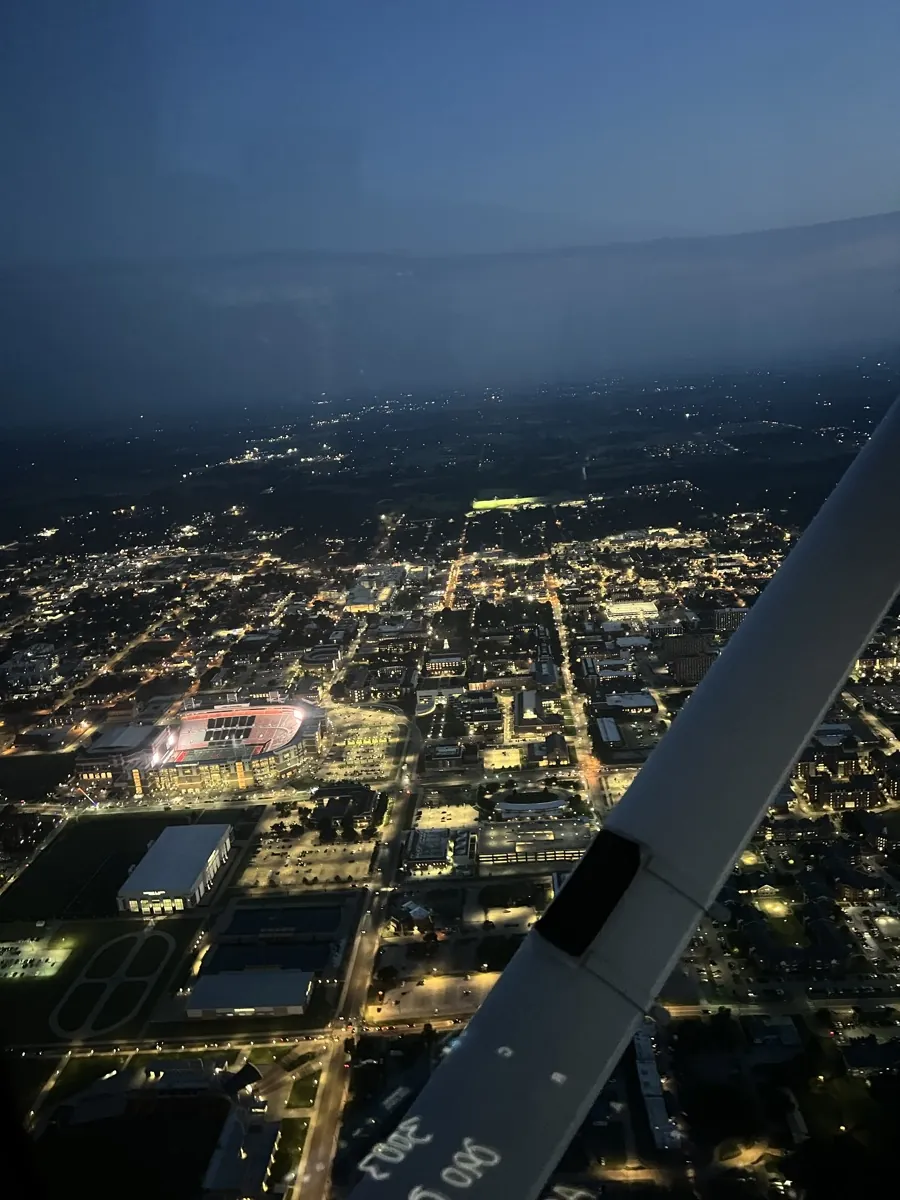
Get current again.
You have the certificate. It has just been a while. A flight review is not a checkride, there is no pass or fail, and most pilots are signed off in a single day.

Every 24 calendar months, the FAA wants an hour on the ground and an hour in the air with an instructor. That is the whole requirement. I am there to correct and refresh, not to judge how much you forgot.

The day, in plain order.
Ground first, then flying, then the endorsement. If you need a second session, we schedule one. Nothing about this is a race.
- 1
Call first.
How long ago you last flew, what you flew, and what you have access to now. That decides how much ground time you need. No charge.
- 2
Ground session.
Current Part 91 rules, airspace, weather minimums, right of way, and what has changed. A conversation, usually one to two hours.
- 3
Fly the review.
Takeoffs and landings, slow flight, stalls, steep turns and a few emergencies. I correct as we go. Usually one to one and a half hours.
- 4
Endorsement.
When you fly to the standard, I endorse your logbook and you are legal as pilot in command for 24 more calendar months.
- 5
Passengers.
Three takeoffs and landings in 90 days to carry passengers, three to a full stop at night for night. Usually one short flight.
- A review every 24 calendar months to act as pilot in command
- At least 1 hour of ground on the current Part 91 rules
- At least 1 hour of flight in the same category and class
- No examiner, no knowledge test, no pass or fail
- A logbook endorsement from the instructor
- A current medical or BasicMed to exercise your privileges
- 3 takeoffs and landings in 90 days for day passengers
- 3 full stop night landings in 90 days for night passengers
What to bring.
Your certificate, logbook, your medical or BasicMed paperwork, and proof of US citizenship such as a passport. You do not need to own an airplane. The airplanes I instruct in all work for a review, and the airports page shows which field is your shortest drive.
What it costs.
You pay for the time you use. If you need a second session, it is billed the same way as the first.
Most pilots lapsed 3 years or less finish in a day.
Common questions.
The things people ask before their first call. If yours is not here, ask me directly.
How long does a flight review take in Dallas Fort Worth?
A flight review requires a minimum of one hour of ground instruction and one hour of flight instruction under 14 CFR 61.56. In practice most pilots need more than the minimum, especially if they have not flown recently. A pilot who has been away one to two years typically takes one and a half to two hours of ground and one to one and a half hours of flight. A pilot who has been away five years or more may need two or three sessions to get back to a comfortable standard. The review is not a test, so there is no pass or fail and no fixed maximum number of sessions. The instructor endorses your logbook once you have demonstrated the required proficiency. Most pilots lapsed three years or less finish in a single day in the Dallas Fort Worth area.
What do I need to bring to a flight review?
Bring your pilot certificate, a current government issued photo ID, your logbook, and proof of a medical certificate or BasicMed completion. If you have been away from flying for a while, read through the current FAR AIM before your ground session so you are not starting cold on the regulations. You do not need to own an aircraft. You can fly one of the RV-12 trainers at 165 dollars an hour wet, or bring your own airplane. If you are flying a rental, confirm the aircraft is current on its annual inspection and that the required documents are on board: airworthiness certificate, registration, operating limitations, and weight and balance data. Your logbook should show your most recent flight review endorsement so I know what standards you were last signed off to. If you plan to fly inside the Dallas Fort Worth Class B airspace, tell me beforehand and we will build the ground session around it.
What is covered in a flight review ground session?
The FAA requires the ground portion to cover the current general operating and flight rules of 14 CFR Part 91, plus any other subjects the instructor considers necessary for safe flight. In practice that means airspace structure and the equipment each class requires, weather minimums for visual flight rules, right of way rules, and any regulatory changes since your last review. I may also cover emergency procedures, aeronautical decision making, and anything specific to where you plan to fly. The ground session is a conversation, not a lecture. I ask questions to find the gaps, explain what has changed, and make sure you leave with a clear picture of current standards. If you want more time on one topic, such as operating in the Dallas Fort Worth Class B airspace, say so in advance.
How much does a flight review cost in the DFW area?
A flight review with Settle Aviation costs 75 dollars per hour for flight instruction and 50 dollars per hour for ground instruction. If you fly one of the Van's RV-12 trainers, the airplane is 165 dollars an hour wet, which means fuel is included, and if you bring your own airplane you pay for instruction only. A standard review is usually about an hour and a half on the ground and an hour and a half in the air, so in an RV-12 the whole review typically comes to about 435 dollars: 75 for the ground session, roughly 360 for the flight and airplane together. A pilot who needs additional sessions pays only for the time they use. There are no packages, no deposits, and no minimum commitments, and there is no surcharge for being rusty. Every airplane is on the fleet page with its panel and rate.
What is a flight review?
A flight review is the FAA's recurring proficiency check for certificated pilots, required under 14 CFR 61.56. Every 24 calendar months you must complete at least one hour of ground instruction and one hour of flight instruction with an authorized flight instructor before you can act as pilot in command again. It is not a checkride. There is no FAA examiner, no knowledge test, and no pass or fail result. The instructor is there to refresh what has faded and correct what has drifted, then endorse your logbook once you fly to the standard. Pilots often call it a BFR, short for biennial flight review, though the FAA dropped the word biennial years ago. Settle Aviation charges 75 dollars per hour for flight instruction and 50 dollars per hour for ground instruction, and most pilots lapsed three years or less finish the whole thing in a single day.
What are the flight review requirements?
14 CFR 61.56 sets three requirements. First, a minimum of one hour of ground instruction covering the current general operating and flight rules of 14 CFR Part 91. Second, a minimum of one hour of flight instruction covering the maneuvers and procedures the instructor considers necessary to demonstrate safe exercise of your privileges. Third, a logbook endorsement from an authorized flight instructor on satisfactory completion. The review must fall within the preceding 24 calendar months for you to act as pilot in command. You also need a current medical certificate or BasicMed, though that is a separate requirement from the review itself. Certain events substitute for a review: passing a practical test for a new certificate or rating, or completing a phase of the FAA WINGS program. Carrying passengers additionally requires three takeoffs and landings within the preceding 90 days under 14 CFR 61.57.
What is on a flight review checklist?
There is no official FAA checklist, because the instructor decides what each review needs to cover. In practice a Dallas Fort Worth flight review works through a predictable list. On the ground: current Part 91 rules, airspace classes and the equipment each one requires, weather minimums for visual flight rules, right of way rules, and anything that changed in the regulations since your last review. In the air: normal and crosswind takeoffs and landings, slow flight, power on and power off stalls, steep turns, and at least one simulated engine failure. Most instructors add short and soft field work and a diversion. Bring your certificate, logbook, medical or BasicMed paperwork, and proof of US citizenship such as a passport. If you plan to operate inside the DFW Class B airspace, say so beforehand and the ground session gets built around it.