
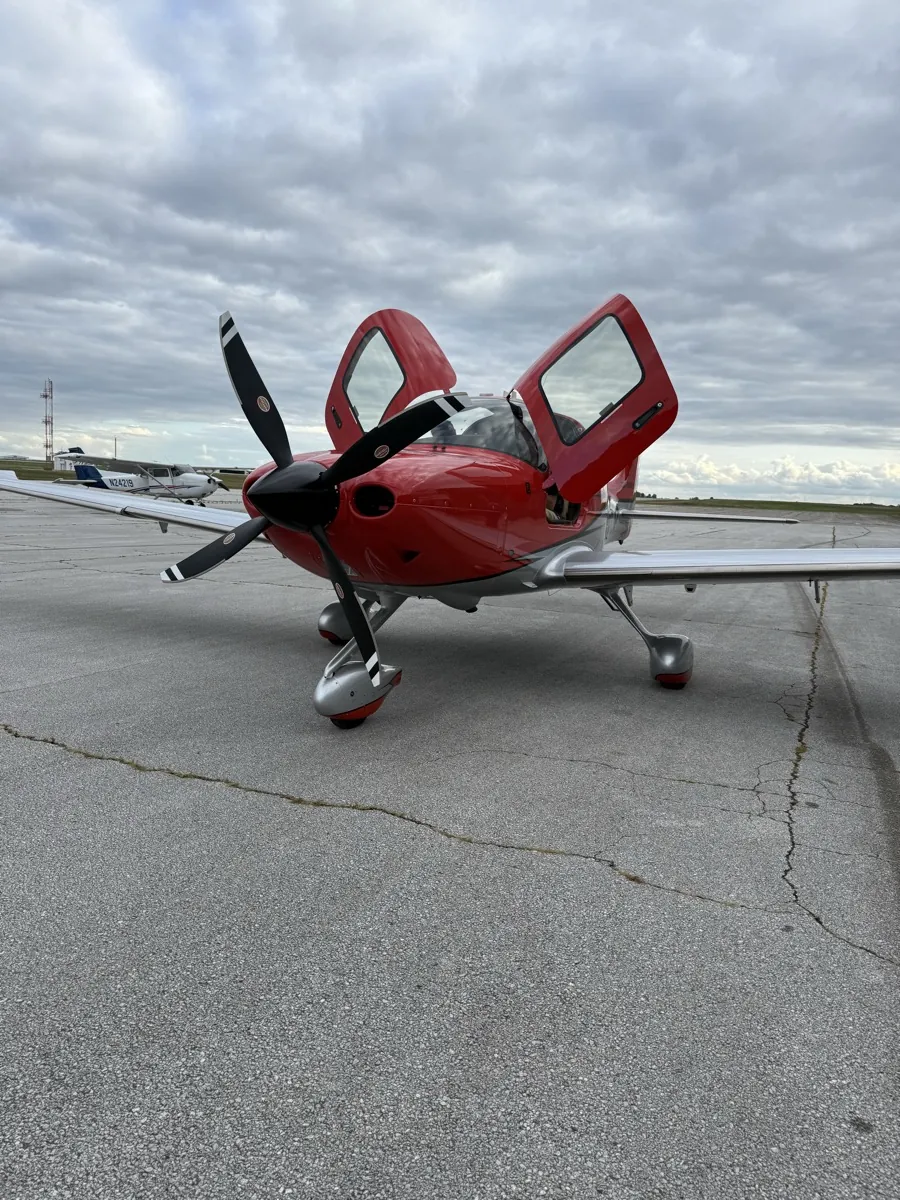
Get paid to fly.
You are instrument rated and your logbook is close to 250. What is left is learning to fly to a standard, and this is exactly what that looks like.
Maneuvers you have never flown.
A commercial certificate lets you fly for compensation, and the FAA sets a higher bar for it. Most pilots come to me instrument rated with the hours nearly there. The work is flying maneuvers you have never flown, to tolerances your private checkride never asked for, and holding up under a long oral.
- Chandelles
- Lazy eights
- Steep spirals
- Eights on pylons
- Power off 180
- Short field
- Soft field

Each one is a lesson in energy management dressed up as a maneuver.
The training, in plain order.
Maneuvers in the airplane, systems and regulations on the ground, both running at once. Roughly 20 to 30 hours of dual from the first lesson to the checkride.
Check the logbook against 61.129.
One sitting confirms the required experience is actually there: the 300 nautical mile solo cross-country, the day and night cross-countries, 10 hours of instrument, and 10 in a complex, turbine, or technically advanced airplane. Anything missing we schedule early so it never holds up your checkride.
Take the written test early.
The FAA commercial knowledge test, done early so it is not hanging over you while you fly maneuvers. Multiple choice, 70 percent, good for 24 months.
Learn the maneuvers.
Chandelles, lazy eights, steep spirals, and eights on pylons, from the left seat. We break them down, fly them badly for a lesson or two, then fly them well.
Sharpen the landings.
Power off 180 accuracy, short field and soft field, held to commercial tolerances. The examiner wants the airplane where you said it would go, every time.
Study the airplane and the rules.
Privileges and limitations, what you can and cannot be paid to do, systems in depth, performance, weight and balance, and decision making. Alongside the flying, not crammed at the end.
Polish to standard, then the checkride.
We fly the whole profile until it is repeatable on a bad day, not just a calm one. Then the oral and the flight with an FAA examiner.
Private certificate, and usually an instrument rating.
A third-class medical keeps you training, but you need a second-class to exercise commercial privileges, so we make sure you hold one before the checkride. Not sure 250 is the right number for you? Part 61 vs Part 141 explains the 190 hour route.
What the FAA asks for.
If you are instrument rated and near 250, most of this is already in your logbook.
- 250 hours total flight time
- 100 hours in powered aircraft, 50 in airplanes
- 100 hours pilot in commandIncluding 50 in airplanes and 50 cross-country
- 10 hours of instrument training
- 10 hours in a complex, turbine, or technically advanced aircraft
- A 2-hour day and a 2-hour night cross-countryEach over 100 nm
- 3 hours with a CFI within 60 days of the checkride
- 10 hours soloIncluding a 300 nm cross-country and 5 hours night VFR
- Commercial knowledge test
- Age 18, second-class medical for paid flying, and the checkride
What it costs.
The instruction rates are fixed and the airplane is $165 an hour wet. The knowledge test and the examiner are paid to them directly, and I will walk through the full numbers for your hour count on the phone. Flying twice a week keeps the total down, because precision maneuvers decay fast.
Common questions.
The things people ask before their first call. If yours is not here, ask me directly.

What does commercial pilot training actually involve?
Commercial training is precision flying. Most pilots arrive holding an instrument rating and sitting near the 250 hour requirement, so the work is not accumulating hours, it is flying to a tighter standard than your private certificate ever asked for. In the airplane that means the commercial maneuvers: chandelles, lazy eights, steep spirals, eights on pylons, power off 180 accuracy landings, and short and soft field work flown to Commercial Airman Certification Standards tolerances. On the ground it means commercial privileges and limitations, the regulations that govern flying for compensation, aircraft systems in real depth, performance and weight and balance, and the decision making the examiner will press you on during the oral. Expect roughly 20 to 30 hours of focused dual, flown from the left seat, with ground sessions running alongside it.
How long does commercial pilot training take?
For a pilot who is instrument rated and already close to 250 hours, the focused commercial training runs about 20 to 30 hours of dual instruction. Flying twice a week, that is roughly two to three months from the first maneuver lesson to the checkride, including ground work and the time it takes to get on an examiner's calendar. Flying once a week or less stretches it out, because precision maneuvers decay quickly and you spend part of each lesson rebuilding what you had. The pacing item is consistency, not talent. Chandelles and lazy eights feel foreign the first few times and then click. Eights on pylons take most pilots the longest, because the airplane has to be flown to a pivotal altitude rather than a fixed one.
What maneuvers are tested on the commercial checkride?
The commercial practical test asks for maneuvers beyond your private certificate: chandelles, lazy eights, steep spirals, eights on pylons, and precision landings, all flown to the tighter tolerances of the Commercial Airman Certification Standards. The examiner also covers emergency procedures, systems knowledge, cross-country planning, and takeoffs and landings flown to commercial precision. It is a longer, more demanding ride than your private checkride, and most people need 20 to 30 hours of focused maneuver training, flown from the left seat, after reaching 250 hours to feel ready.